What is the Wonderlic Test? A Complete Guide
You've likely heard the term, especially if you're navigating the job market or applying to certain academic programs. But what exactly is the Wonderlic Test? Many people wonder if it's just another hurdle, or a genuine tool for assessment. This comprehensive guide will demystify the Wonderlic Test, explaining its purpose, format, the abilities it measures, and why it's a significant factor for many employers and institutions. Understanding the Wonderlic is the first step to conquering it, and you can start your preparation journey with our comprehensive Wonderlic practice tests to get ahead.
Understanding the Wonderlic Test
The Wonderlic Test is a popular pre-employment and academic placement cognitive ability test. It's designed to measure an individual's general mental ability, which includes their capacity to learn, adapt, solve problems, and understand instructions. It's not a test of specific job skills, but rather of the underlying cognitive functions that contribute to success in various roles and learning environments. Many organizations use it as part of their job applicant screening process.

The Core Purpose of the Wonderlic Personnel Test
The primary version you'll encounter in a professional setting is the Wonderlic Personnel Test (WPT-R). Its main goal is to help employers predict how well a candidate might perform in a job by assessing their problem-solving and learning capabilities. Companies believe that strong problem-solving skills are a good indicator of on-the-job success. Why do employers use the Wonderlic test? They use it to quickly and objectively assess a large pool of candidates, helping to identify those with the cognitive aptitude suited for specific roles, particularly those requiring quick thinking and decision-making.
Understanding the Wonderlic SLE (Scholastic Level Exam)
For academic purposes, you might encounter the Wonderlic Scholastic Level Exam (SLE). This version is very similar in format and content to the Personnel Test but is used to assess a student's potential for success in vocational training programs or higher education. It helps institutions gauge if a student possesses the necessary skills assessed by a cognitive ability test to handle the academic workload. Both versions aim to evaluate similar cognitive domains.
Key Abilities Measured by the Wonderlic Test
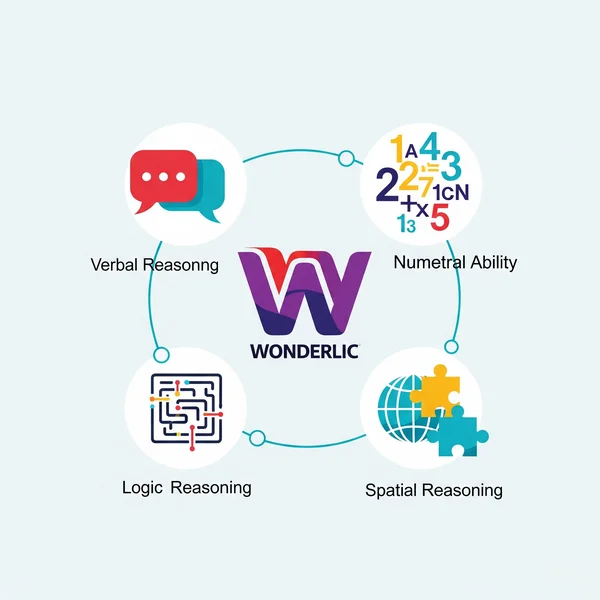
What abilities does the Wonderlic test measure? The Wonderlic Test assesses a range of cognitive skills crucial for learning and job performance. These generally fall into a few key categories:
- Verbal Reasoning: This includes your ability to understand and use written language. Questions might involve vocabulary, analogies, and understanding sentence structure. Strong verbal reasoning is essential for communication and comprehension.
- Numerical Ability: This tests your basic math skills, including arithmetic, percentages, ratios, and simple algebra. You won't need advanced calculus, but quick and accurate numerical ability is key.
- Logic and Problem-Solving: This measures your capacity to think critically, identify patterns, and solve problems. These questions often require you to deduce answers from given information or scenarios.
- Spatial Reasoning & General Knowledge: Some questions might touch upon your ability to visualize shapes or answer common sense questions, reflecting a broad base of understanding.
Effectively, the Wonderlic provides a snapshot of your general intelligence, which is why some people mistakenly ask, Is the Wonderlic an IQ test? While it measures cognitive abilities similar to those assessed in some IQ tests, it's specifically designed and validated for employment and academic selection.
Wonderlic Test Format: Questions, Time, and Structure
Understanding the Wonderlic test format is crucial for effective preparation. How is the Wonderlic test structured? It's known for its brevity and the variety of its questions.
-
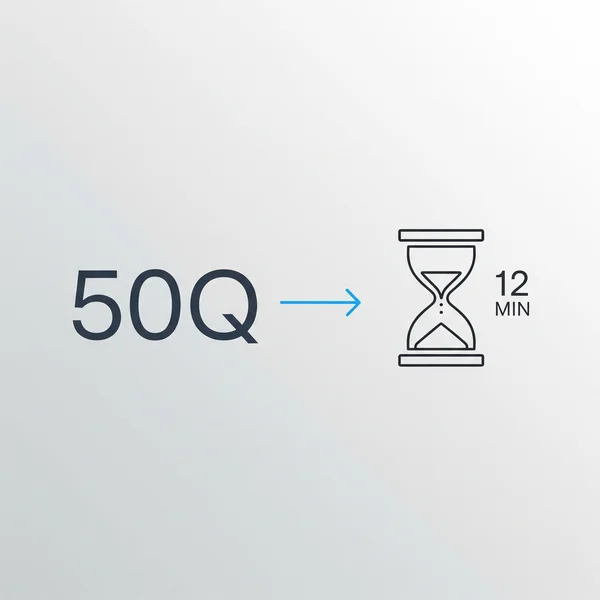
Number of Questions: The standard Wonderlic Test (both WPT-R and SLE) consists of 50 questions.
-
Time Limit: You have a strict Wonderlic test time limit of just 12 minutes to answer as many questions as possible. This works out to an average of about 14 seconds per question, emphasizing speed and accuracy.
- Question Types: The wonderlic test questions are multiple-choice and cover a mix of the abilities mentioned above – math, vocabulary, logic, spatial reasoning, and general knowledge. The difficulty of questions can vary, but they are generally designed to be answered quickly if you understand the concept. If you're curious about the types of questions, you can explore sample questions on our platform to get a better idea.
The test structure is designed to be challenging due to the time constraint, requiring efficient test-taking strategies.
Decoding Wonderlic Test Scores: How is it Graded?
Your Wonderlic score is simply the number of questions you answer correctly within the 12-minute time limit. There's no penalty for incorrect answers, so it's generally advisable to attempt every question, even if it means making an educated guess on some.
The scoring system is straightforward:
- Each correct answer is worth one point.
- The maximum possible score is 50.
- An average score is often cited as being around 20, which is equivalent to an IQ of 100. However, "good" scores vary significantly depending on the job role or academic program. For example, a systems analyst might be expected to score higher than a warehouse worker.
Understanding what a good score means for your specific situation is important. We will delve deeper into score interpretation in future articles, but you can always get a baseline by taking a Wonderlic practice test on our site.
The Significance of the Wonderlic Test in Hiring & Admissions
Why do employers use the Wonderlic test, and why do academic institutions rely on it? The Wonderlic is valued for several reasons:
- Predictive Validity: Studies have shown a correlation between Wonderlic scores and job performance, as well as academic success, particularly for roles and programs that require significant cognitive load.
- Objectivity and Efficiency: It provides a standardized, objective measure that can be quickly administered to many applicants, making the initial job applicant screening process more efficient.
- Cost-Effectiveness: Compared to other assessment methods, it's a relatively inexpensive way to gather insights into a candidate's cognitive abilities.
Whether for college admission test purposes or pre-employment screening, the Wonderlic serves as a data point to help organizations make more informed decisions.
Your Next Steps with the Wonderlic Test
The Wonderlic Test is a widely used tool for assessing general cognitive ability. It's a fast-paced, 50-question, 12-minute exam designed to measure your capacity for learning, problem-solving, and understanding instructions. By understanding its format, the types of wonderlic test questions asked, and its scoring, you're already on the path to better preparation.
The key to success lies not just in understanding what the Wonderlic is, but in practicing and developing strategies to tackle it effectively. Are you ready to see how you'd fare? Try a free Wonderlic sample test to experience the format firsthand and identify areas where you can improve. This initial step can provide valuable insights for your preparation journey.
What are your biggest concerns about the Wonderlic Test? Share your thoughts in the comments below!
Wonderlic Test FAQ (Frequently Asked Questions)
Is the Wonderlic Test an IQ test?
While the Wonderlic measures cognitive abilities similar to those in some IQ tests and scores can be loosely correlated, it's not formally an IQ test. It's specifically designed and validated as a personnel selection and academic placement tool. The focus is on practical problem-solving and learning potential relevant to work or study.
How difficult is the Wonderlic Test?
The difficulty is subjective but largely stems from the strict 12-minute time limit for 50 questions. Individual questions range from easy to moderately challenging. The pressure to answer quickly is what most test-takers find difficult. Consistent practice with Wonderlic practice tests can significantly help you manage the time pressure and improve your speed.
How long is the Wonderlic test?
The Wonderlic test has a Wonderlic test time limit of exactly 12 minutes, during which you need to answer 50 questions.
What kind of questions are on the Wonderlic test?
The wonderlic test questions are a mix of math (arithmetic, percentages, ratios), vocabulary (analogies, definitions), logic puzzles, spatial reasoning, and general knowledge/common sense questions. The goal is to assess a broad range of cognitive skills quickly. You can explore various question types with our online simulation to see for yourself.
Why do employers use the Wonderlic test?
Employers use the Wonderlic as a quick, objective, and cost-effective tool to assess a candidate's general cognitive ability – their capacity to learn, problem-solve, and understand instructions. This helps them predict potential job performance, especially for roles requiring quick thinking and adaptability. It's a part of their job applicant screening process to identify suitable candidates efficiently.