Wonderlic Practice Score: What It Can and Cannot Tell You
A Wonderlic practice score can feel bigger than it really is. One number appears on the screen after a timed mock test. It is easy to treat that number as a preview of your future or a verdict on your ability.
A better use is more practical. On an independent Wonderlic prep guide, a practice score is most helpful when it becomes a planning signal. It can show how the pace felt, where mistakes clustered, and which part of the test format still needs work.
That is the core boundary for this article. A practice score can be useful. It is not an official Wonderlic result, a hiring guarantee, or a full measure of your potential.
Disclaimer: The information and assessments provided are for educational purposes only and should not replace professional medical advice, diagnosis, or treatment.

Why a Wonderlic practice score is useful but incomplete
A mock score matters because it gives structure to preparation. Instead of guessing how ready you are, you get a timed snapshot that reflects the pressure of answering quickly and moving on.
That snapshot can be especially useful on a site built for independent practice. Wonderlic-style prep is often stressful because the test feels fast, mixed, and unforgiving. A practice score turns some of that uncertainty into something you can review.
At the same time, the score is incomplete by design. It comes from a practice environment, a specific day, and one run through the task. That means it can inform your next step without deciding everything about your real test-day outcome.
The site's practice test tools are most valuable when they are used that way. They help you train for format, timing, and strategy, not replace the official testing context.
What a practice score can tell you
A practice score can show whether your current approach is working well enough to keep, or rough enough to revise. That is already useful.
It can also reveal how you handle the pace of a Wonderlic-style session. On this site, the practice format stays close to the familiar 50-question, 12-minute structure. Even one mock run can show whether you are spending too long on single items, rushing easy items, or losing control in the middle of the clock.
Use one mock result as a baseline, not a verdict
The University of Delaware recommends setting a realistic target score from an early [pretest taken near the beginning of preparation]. That is a strong way to think about a Wonderlic practice score too: as a baseline that helps you choose a goal and a study plan.
A baseline score can answer practical questions. Are you missing the score target because of content gaps, because of timing, or because of both? Are unanswered questions the main problem, or are fast guesses creating the damage?
This is where a Wonderlic learning hub becomes useful. Once the first practice result exists, blog guides, timing advice, and item-type reviews have a clearer purpose. You are no longer studying in the dark.
A practice score can also help with emotional pacing. A low first result does not automatically mean low ability. It can simply mean the format is still unfamiliar, the pacing strategy was weak, or the pressure of the timer changed the way you usually think.
What a practice score cannot tell you
One practice result cannot tell you everything about the official test. It cannot show every condition that will matter on test day, and it cannot guarantee that the same number will appear again under a different setup.
That is true even when the mock test feels realistic. Timed testing is sensitive to familiarity, fatigue, distractions, and strategy choices. A practice score helps you learn from those factors, but it does not erase them.
Why one timed mock score does not predict everything
An archived U.S. Department of Education testing resource quotes the National Research Council that [no single test score should be considered a definitive measure] and that major decisions should not rest on one score alone. That principle matters here.
A 1-time mock score is still only one sample of performance under one set of conditions. It can suggest where you stand today, but it cannot fully predict how you will perform after more review, after a better pacing plan, or under different testing conditions.
It also cannot act as an official employment judgment. This site is an independent preparation resource, not the official Wonderlic testing authority. The score is useful for rehearsal and reflection, but it is still part of preparation rather than certification.
That is why overreaction goes in both directions. A strong mock result is not permission to stop preparing. A weaker result is not proof that the real test is already lost.
How to use the result responsibly before test day
A more productive response is to turn one score into a short review cycle. Look at the total, but also review the path that produced it: pacing, skipped items, repeated error types, and which question styles slowed you down.
That kind of review fits the purpose of an independent prep platform. The goal is not to worship one number. The goal is to convert the number into the next few actions that actually improve readiness.
Turn score, pacing, and mistake pattern into a next-step plan
An ERIC review of online practice systems says [practice tests and related prep activities] can improve familiarity with content and item types, provide feedback on readiness, and reduce test anxiety. That makes repeated mock work most useful when it is paired with review, not just repetition.
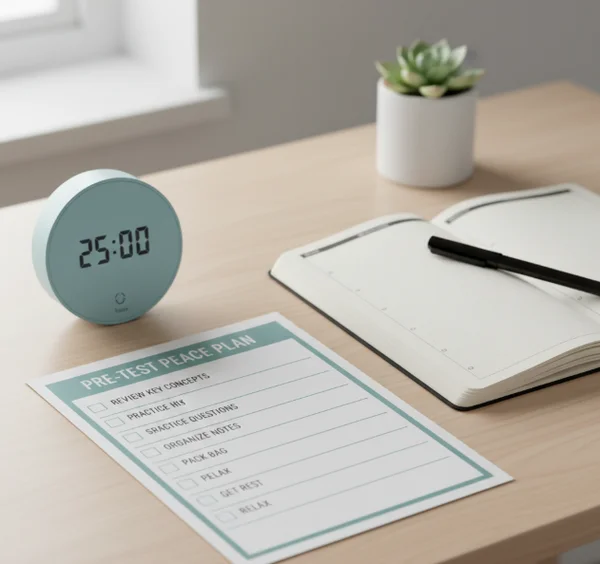
A practical next-step plan can stay simple:
- Keep the score as a baseline rather than a final label.
- Note how many questions you reached before the timer became the main problem.
- Group misses by type so you can tell whether the bigger issue is math speed, verbal logic, or timing decisions.
- Use the site's explanations or optional AI report as a planning aid, not as an official judgment.
- Retest after focused review instead of retaking immediately out of frustration.
If anxiety rose sharply during the mock, that data matters too. A practice score can reflect test pressure as much as raw preparation. If symptoms are severe or if symptoms persist, talk to a mental health professional, see a healthcare provider, or seek professional help before the next high-pressure sitting. If testing difficulty is affecting school, work, or major career decisions, a qualified counselor, educator, or licensed psychologist can help you plan next steps more safely.
Key Takeaways: Keep prep strategic and score interpretation modest
A Wonderlic practice score can tell you where to start, what to fix, and how the format currently affects your performance. That is a real advantage. It is enough to guide preparation without becoming a final judgment.
The safest use keeps the score in proportion. Use the site's prep strategy hub to review timing, question types, and improvement patterns, then keep reminding yourself that practice data is a tool for preparation rather than a guarantee about the official result. That balance is what turns mock testing into useful preparation instead of avoidable panic.