Wonderlic Select Assessment: What It Measures and How to Prepare
The wonderlic select assessment can feel confusing because people use several names for the same hiring-screening family: Wonderlic Select, WonScore, Wonderlic cognitive assessment, and Wonderlic pre-employment assessment. If an employer assigned it, you probably want to know what it measures, how hard it is, whether practice helps, and what to ignore when search results promise "answers." This guide explains the assessment from a candidate-prep point of view, with practical ways to practice without treating unofficial materials as official results. For a low-pressure way to get used to the pace, you can explore an independent Wonderlic preparation resource before your scheduled assessment.

What Is the Wonderlic Select Assessment?
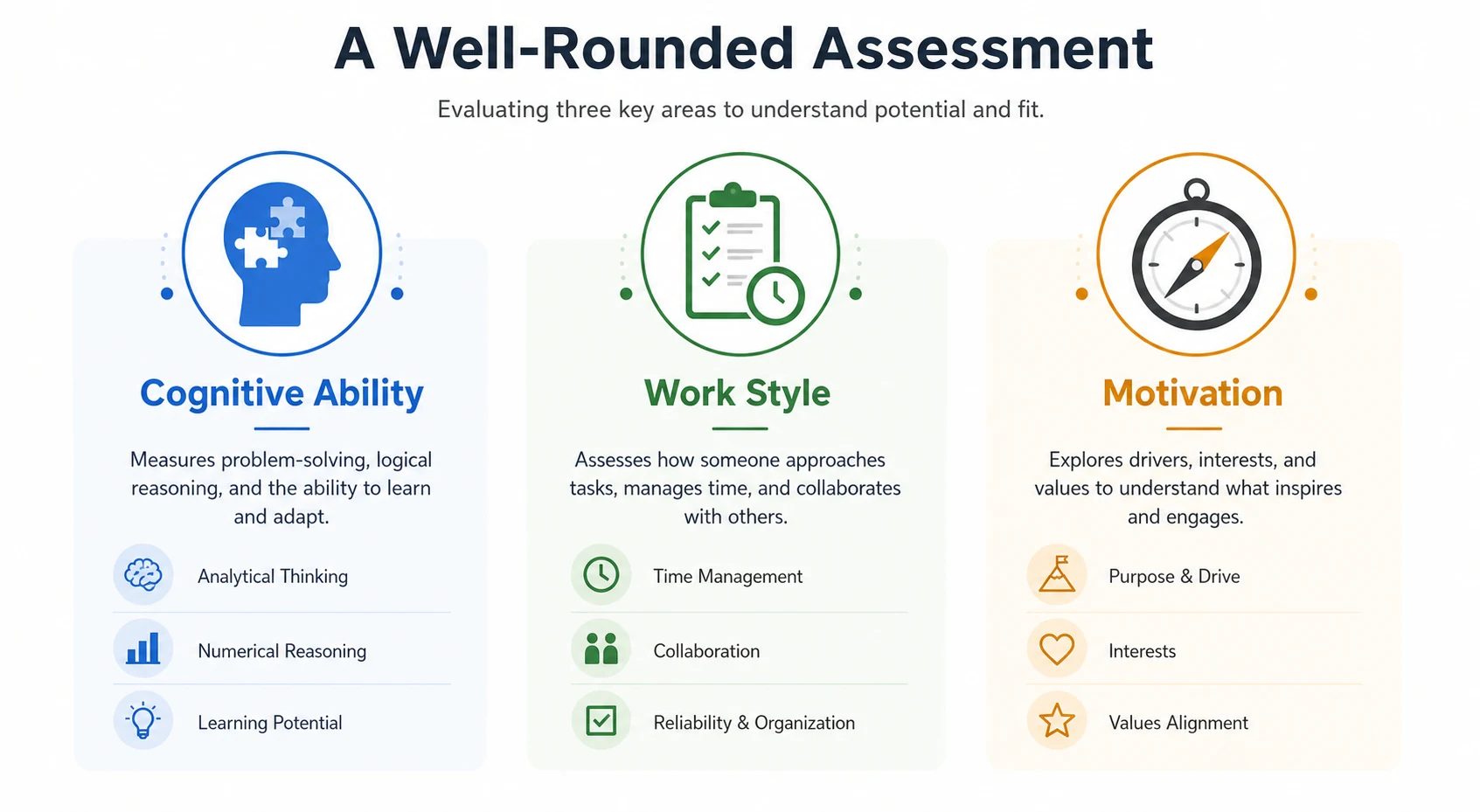
Wonderlic Select is a pre-employment assessment system used by employers to understand job fit. In candidate language, it usually combines a fast cognitive ability section with personality and motivation measures. The exact experience can vary by role, but the core idea is broader than a single quiz score: it looks at problem-solving speed, work style, and motivation.
The cognitive portion is the part most people mean when they search for a Wonderlic Select assessment practice test. It is associated with the classic 50-question, 12-minute Wonderlic format, where speed matters almost as much as accuracy. Questions may touch basic math, vocabulary, verbal reasoning, logic, and pattern recognition. The time limit is what makes otherwise manageable questions feel difficult.
The personality and motivation portions are different. They are not about solving arithmetic quickly. They ask you to respond to work-style statements or choose between preferences. Your best preparation is understanding the format, reading carefully, and answering consistently and honestly in relation to real work habits.
Wonderlic Select vs. the Classic Wonderlic Cognitive Test
The classic Wonderlic cognitive test is often described as a short measure of general problem-solving ability. Wonderlic Select uses cognitive ability as one part of a broader hiring picture. That distinction matters because many older articles, PDFs, and forum threads focus only on the 50-question cognitive section.
For candidates, the practical takeaway is simple: practice the cognitive pace, but do not assume the entire assessment is only math and logic. You may also see work-preference or personality-style items. These sections are usually not helped by memorizing "correct" responses, because employers are looking for fit with a specific role, not one universal personality profile.
It also helps to avoid treating the assessment as an IQ label. A hiring assessment is used in a job context, alongside resumes, interviews, experience, and role requirements. Your goal is to perform clearly and consistently, not to turn one practice score into a fixed judgment about your ability.
What Types of Questions Should You Expect?
For the cognitive section, expect a wide mix rather than one subject. A single timed set may include mental math, word relationships, sentence logic, analogies, number patterns, spatial reasoning, and general problem-solving. The challenge is switching quickly. Spending two minutes on one tricky item can cost several easier points later.
For personality-style items, expect statements about behavior at work, decision-making, organization, stress tolerance, cooperation, and communication. For motivation-style items, expect choices that compare different work activities or environments. These items may feel less like school questions and more like structured self-report prompts.
Because Wonderlic Select is used for employment, the same assessment name may not mean every candidate sees the same section mix. A technical role may weigh information differently than a customer-facing role, so generic "passing score" advice can be misleading.
Is the Wonderlic Select Assessment Hard?
It can be hard, but not always because the questions are advanced. The cognitive section is hard because of pace. Fifty questions in 12 minutes leaves roughly 14 seconds per question, so test-takers need to recognize when to answer, when to estimate, and when to move on.
The personality and motivation sections can feel hard for a different reason: candidates overthink what the employer wants. Trying to reverse-engineer every response often creates inconsistent patterns. A steadier approach is to understand the role, read each item literally, and answer in a way that reflects how you are likely to behave over time.
Practice helps most when it reduces surprise. You do not need to memorize leaked answer lists. You need to know the question styles, build speed on easy and medium items, and create a plan for skipping time traps.
A Practical Wonderlic Select Assessment Practice Plan
Start with an untimed review of question types. Work through basic arithmetic, vocabulary, analogies, number series, and logic items slowly enough to understand why each answer is right. This builds recognition, which matters when the clock starts.
Next, shift into short timed sets. Instead of jumping straight into a full assessment every day, try five-minute drills that force quick decisions. Track the items you skipped, guessed, and missed. The pattern matters more than one score: if you often miss word problems, practice translating sentences into simple equations; if you freeze on vocabulary, build a short daily word-review habit.
Then run a full 12-minute practice simulation. Use it to test your pacing rule. One common approach is to answer easy questions immediately, make a fast educated guess when you can eliminate choices, and skip anything that clearly needs too much setup. Afterward, review mistakes calmly. The review is where most improvement happens.
For personality and motivation preparation, do not rehearse fake answers. Instead, read about the role, reflect on your real work preferences, and practice staying consistent. If you want a simple starting point, an online Wonderlic-style practice tool can help you separate timing issues from content issues before test day.

What About Wonderlic Select Assessment Answers?
Searches for "wonderlic select assessment answers" and "questions and answers PDF" are common, but they can lead you in the wrong direction. First, real hiring assessments are controlled by the employer or assessment provider, and unofficial answer dumps may be inaccurate, outdated, or unrelated to the version you receive. Second, relying on copied answers does not prepare you for the time pressure or the mixed question set. Third, using unauthorized materials can create ethical and practical problems in a hiring process.
A better use of answer explanations is learning method, not memorizing final letters. For example, when you review a math item, ask what shortcut would have helped. When you review a verbal analogy, name the relationship between the words. When you review a missed logic item, decide whether the problem was reading speed, setup, or rushing.
If you find discussions on Reddit or other forums, treat them as anecdotal. They can reveal that other candidates also found the pace stressful, but they cannot tell you exactly what your employer will ask or what score will be enough for your role.
What Is a Good Score?
For the older cognitive-style Wonderlic format, people often talk about a 0-to-50 score because each correct answer can count as one point. You may see average-score discussions online, plus occupation-specific benchmarks from legacy materials. Those references can be useful background, but they should not be treated as a current Wonderlic Select target for every role.
Wonderlic Select is job-specific. Employers may consider cognitive ability, personality, motivation, and role requirements together. A stronger fit for one job may not be identical to a stronger fit for another. That is why the safest preparation goal is not "hit one magic number." It is to improve your cognitive pacing, reduce careless misses, and respond consistently to work-style items.
If the employer shares instructions, read them closely. They are more relevant than generic score charts. If you are unsure about logistics, ask the recruiter about timing, deadlines, technical requirements, and whether accommodations or retakes are handled through the employer's process.
Candidate Checklist Before the Online Assessment
Before the assessment window opens, make the basics boring. Test your internet connection, charge your device, close distracting tabs, and choose a quiet place. Keep permitted materials only; if the instructions say no calculator, do not use one. Have a plain sheet of scratch paper only if the employer or assessment instructions allow it.
For the cognitive section, warm up lightly but avoid exhausting yourself. Review a few arithmetic shortcuts, word relationships, and pattern items. Remind yourself of your skip rule. The goal is to arrive alert, not overloaded.
For personality and motivation sections, slow down enough to read the wording. Do not try to make every trait sound extreme. Consistency usually comes from answering like a real person with stable preferences.

How to Use Practice Without Overtraining
Practice should make the assessment feel more familiar, not turn every day into a pressure drill. If you have a week, mix untimed review with short timed sets and one or two full simulations. If you have only a day, focus on format awareness, light timing practice, sleep, and setup.
Do not spend all your time on your strongest question type. The fastest gains often come from fixing repeated small errors: arithmetic slips, missed keywords, slow estimation, or staying too long on one item. Keep a short error log with three columns: question type, mistake pattern, and next action. That small habit turns practice into feedback.
Also remember the boundary of unofficial prep. WonderlicTest.net is an independent preparation resource, not the official assessment administrator. Use practice to understand pace and question style, then follow your employer's official instructions for the real process.
Build a Clear, Low-Stress Prep Path
The wonderlic select assessment is easier to approach when you separate it into parts: fast cognitive problem-solving, work-style consistency, motivation fit, and test-day logistics. You cannot control every employer decision, but you can control your preparation routine, your pacing, and your attention to instructions.
If you want to rehearse the rhythm before the real assessment, review a few question types, complete a timed set, and reflect on where time disappeared. A calm round of Wonderlic Select assessment practice can help you turn vague worry into a specific plan: what to review, what to skip faster, and how to stay steady when the clock feels tight.
FAQ
What is a Wonderlic Select test?
It is a pre-employment assessment system that may combine cognitive ability, personality, and motivation measures. Employers use it to understand job fit, often alongside resumes, interviews, and other hiring steps.
Is it hard to pass the Wonderlic test?
The cognitive section can feel hard because it is fast, not because every question is advanced. The best preparation is timed practice, quick skipping decisions, and careful review of missed question types.
How do you pass the Wonderlic assessment?
Follow the employer's instructions, practice the cognitive question types, build a pacing plan, and answer personality or motivation items consistently. Avoid relying on answer dumps because they do not build real speed or format awareness.
What is a good score on a Wonderlic test?
For older cognitive-score discussions, people often refer to a 0-to-50 scale, but Wonderlic Select results are job-specific. A "good" result depends on the role, employer expectations, and how the full assessment is interpreted.
How many questions are on the Wonderlic Select cognitive assessment?
The classic cognitive format is commonly associated with 50 multiple-choice questions in 12 minutes. Your employer's exact assessment flow may include additional personality or motivation sections.
Are Wonderlic Select assessment answers available online?
You may find unofficial answer claims online, but they may be inaccurate, unauthorized, or irrelevant to your version. Use explanations to learn methods, not to memorize answer letters.
Can Reddit help with Wonderlic Select assessment prep?
Reddit threads can show common candidate concerns, such as time pressure or uncertainty about scores. Treat them as personal experiences, not official instructions or reliable score targets.